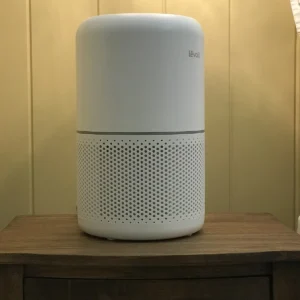
Philips PureProtect 3200 Series (AC3220/10)
Our score: 8.3/10 out of 10520 m³/h CADR · rooms up to 135 m² · 15 dB(A) on sleep
An air purifier draws room air through a filter and blows it back out. How much it cleans depends on its clean air delivery rate (CADR) against the size of your room, not on the brand. After that, the differences you live with are noise on the lowest setting, the filter class and what replacement filters cost each year.
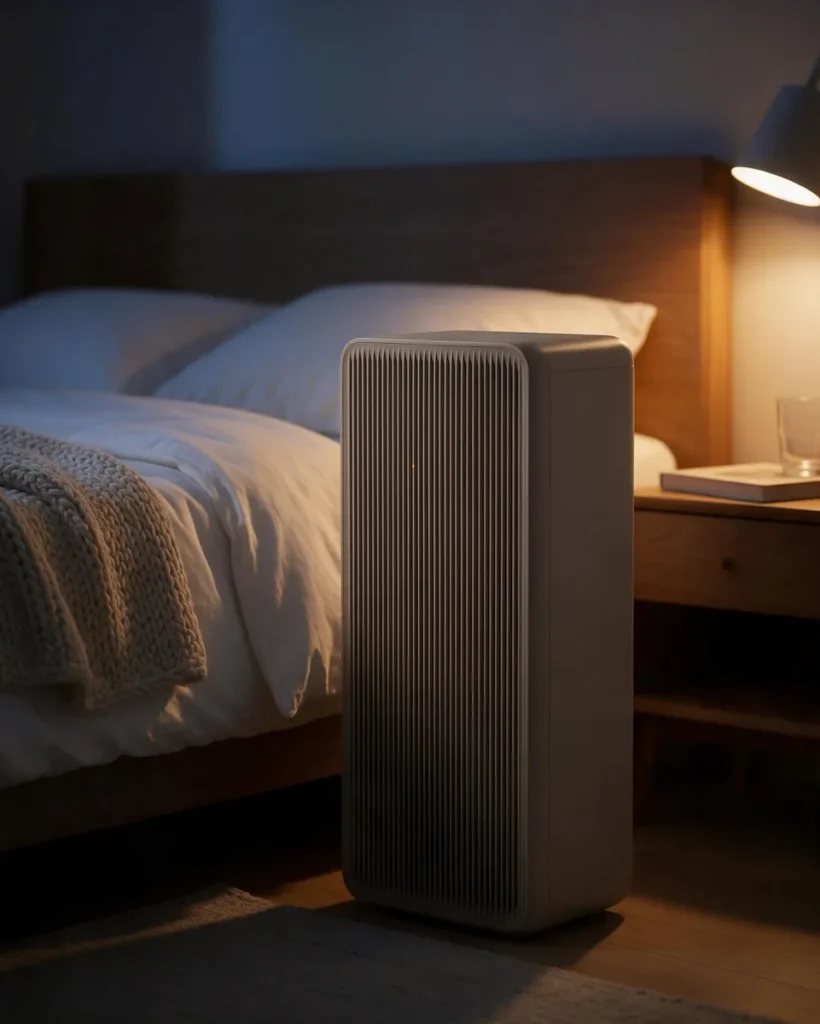
500 m³/h CADR, app control and one filter set a year
Three-year filter and a 13 dB sleep setting at a mid-range price
App, particle sensor and a filter set that lasts about a year
520 m³/h CADR · rooms up to 135 m² · 15 dB(A) on sleep
281 m³/h CADR · rooms up to 29 m² · 20 dB(A) on sleep
258 m³/h CADR · rooms up to 54 m² · 24 dB(A) on sleep
697 m³/h CADR · rooms up to 147 m² · 26 dB(A) on sleep
481 m³/h CADR · rooms up to 43 m² · 25 dB(A) on sleep
239 m³/h CADR · rooms up to 20 m² · 18 dB(A) on sleep
rooms up to 100 m² · 24 dB(A) on sleep · 60 months filter life
170 m³/h CADR · rooms up to 44 m² · 19 dB(A) on sleep
120 m³/h CADR · rooms up to 14 m² · 26 dB(A) on sleep
187 m³/h CADR · rooms up to 40 m² · 24 dB(A) on sleep
We compared each purifier’s published clean air delivery rate, noise on the lowest setting, filter class and filter interval, checked prices at UK retailers and read owner reviews where we could. We don’t lab-test purifiers, and where a maker publishes no CADR we say so. How we choose.
Measure the floor area. In a room with a 2.4 m ceiling, about five air changes an hour needs a CADR in m³/h of roughly 12 times the area in m², so a 15 m² bedroom wants around 180 m³/h. Brand room-size claims often assume fewer air changes, so compare CADR.
It depends on the model and how many hours a day it runs. Each product page gives the maker’s interval for the main filter and its part number. On most models the filter light counts running time rather than testing the filter, so change it when the light comes on, even if the filter still looks clean.
Levoit says non-genuine filters can throw out its filter-life reminder, and Coway and Meaco exclude damage from parts they haven’t approved from their warranties. A compatible filter may fit, but the purifier’s maker hasn’t checked its grade. Match the part number before you buy.
The NHS hay fever advice is to keep windows and doors shut where possible, vacuum often and dust with a damp cloth; it says nothing about purifiers. Allergy UK suggests purifiers for year-round allergies to indoor triggers such as dust mites. A purifier is not a treatment: ask a pharmacist or GP about symptoms.
UK government advisers (SAGE-EMG, 2020) did not recommend ionisers and other non-filter add-ons unless shown to be safe, because they can create irritant by-products such as ozone. Each product page says whether a model has an ioniser and whether it switches off.
No. It filters the air already in the room and adds no fresh air, and UK government advisers say it should never be a reason to ventilate less. Keep extractor fans and trickle vents working.
Want it to do more than purify? Compare purifier fans and heaters, which cool you or warm the room as well, and purifier dehumidifiers and humidifiers for damp or dry rooms.
Image credits: Home Air Quality Guides (homeairguides.com), CC BY-SA 2.0